


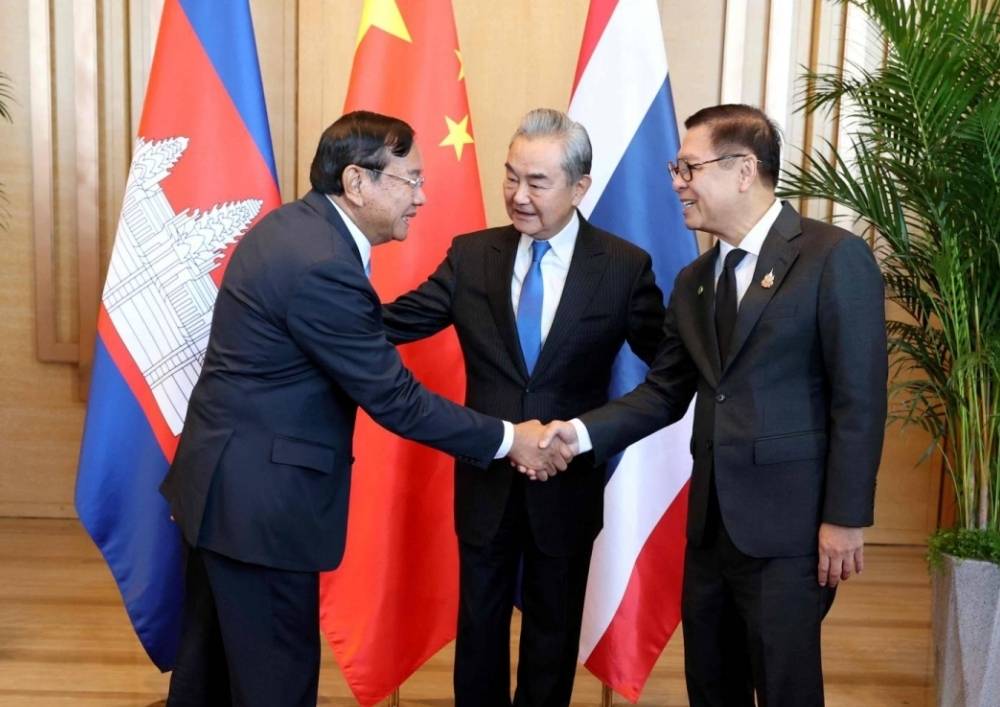
Beijing, China — In a significant diplomatic development, Thailand and Cambodia have agreed to consolidate their fragile ceasefire and work on rebuilding mutual trust after weeks of deadly border clashes that shook Southeast Asia. The commitment came during China-mediated talks in Yunnan province, where senior officials and foreign ministers from both nations met with Chinese diplomats to map out a roadmap for lasting peace along the volatile border.
The recent clashes, which erupted earlier this month, resulted in at least 101 deaths and forced more than half a million people from border communities in Thailand and Cambodia to flee their homes. The violence represented one of the most severe escalations between the neighbouring countries in years, reigniting long-standing tensions over territorial disputes.
During the trilateral discussions, Chinese Foreign Minister Wang Yi described the ceasefire as “hard-won” and urged both nations to ensure it holds. He emphasised the need for continued dialogue, mutual concessions, and robust mechanisms to prevent renewed hostilities. Both sides committed to gradual confidence-building measures and sustained diplomatic engagement as a pathway to stabilising the border region.
Officials highlighted that China’s role as mediator was pivotal in maintaining momentum for peace. They stressed the importance of humanitarian support for displaced populations and the need for cooperation between Thai and Cambodian authorities to prevent further civilian suffering. The talks also underscored the necessity of political trust and transparency in ensuring that the ceasefire is respected by military and local authorities on both sides.
Both countries acknowledged that restoring stable relations would be a gradual and delicate process, requiring careful diplomacy, enforcement of ceasefire agreements, and ongoing communication to prevent misunderstandings. The joint communique emphasised that neither side should revert to military escalation, with China reinforcing the importance of adherence to agreed-upon measures for the safety and security of local populations.
The ceasefire agreement marks a rare success after earlier regional attempts, including interventions by ASEAN and diplomatic efforts from other global powers, failed to fully halt the clashes. Analysts say that while the ceasefire is a positive step, its durability will depend on the political will of both governments, effective monitoring mechanisms, and China’s continued engagement as a neutral facilitator.
With the agreement in place, attention now turns to implementation on the ground, ensuring that displaced civilians can return safely and that the border remains stable. Observers note that the coming weeks will be crucial in testing whether diplomatic commitments translate into tangible peace and long-term stability in this historically tense region.
This story has been reported by PakTribune. All rights reserved.