


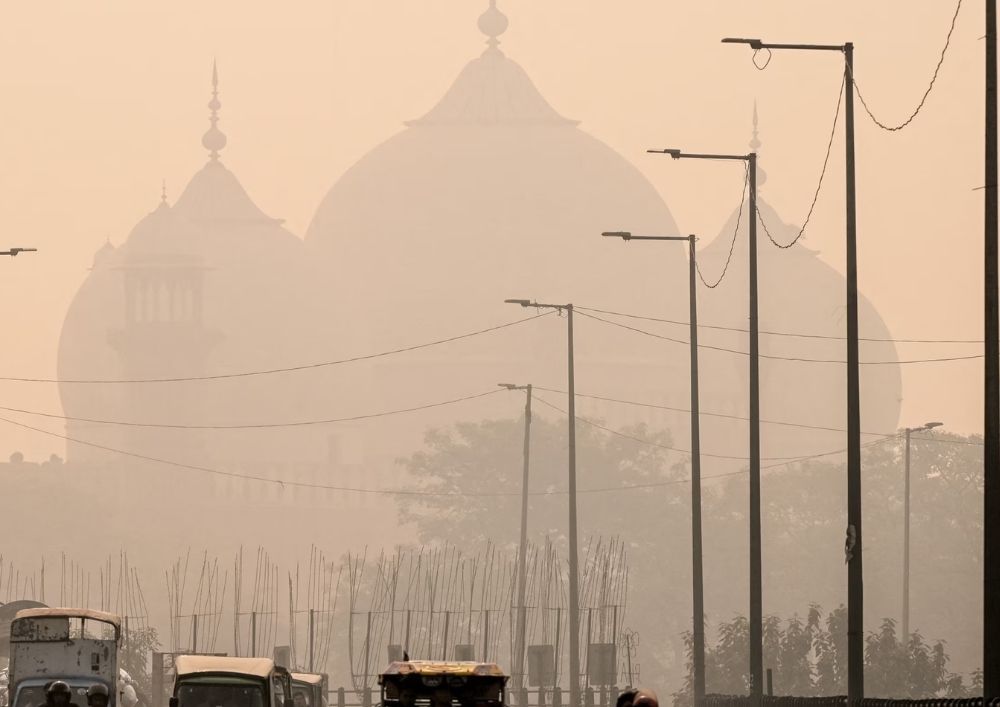
LAHORE, PAKISTAN: Punjab has kicked off one of its most aggressive anti-smog drives to date, rolling out a structured, long-term strategy aimed at finally breaking the province’s annual winter pollution cycle. What was once a reactive seasonal response is now being transformed into a full-scale environmental reform plan built on data, enforcement and greener practices.
The province — which until just two years ago operated with barely three functional air-quality monitors — now has 75 fixed and 10 mobile stations, with at least 25 more expected by the end of 2025. Backing this infrastructure is a newly developed AI-based forecasting model capable of predicting smog intensity a full week in advance, allowing authorities to take pre-emptive action instead of scrambling after the damage is done.
A major breakthrough of the government’s findings is the identification of fugitive dust as a leading pollutant. Unpaved roads, open construction sites and unattended public-works areas have been pumping massive quantities of particulate matter into the air. To curb this, Punjab has deployed high-capacity mist cannons, mandated dust-control protocols at construction zones and enforced fencing for all major development projects.
Vehicle emissions — long blamed as a major contributor to Lahore’s haze — are being targeted with newly established fuel-testing labs in Lahore, Rawalpindi and Multan. Mobile labs have joined the effort, and emission-testing equipment has examined more than 260,000 vehicles so far. The government has also operationalised an Environmental Protection Force, a 250-member unit equipped with electric bikes, body cameras and divisional offices to enforce environmental laws.
The agricultural sector, often criticised for residue burning, is also undergoing reform under the “Punjab Clean Air Programme.” The province is distributing 5,000 super-seeders, planning an additional 5,000, and offering Rs30 billion in interest-free loans to help farmers transition to cleaner harvesting practices. More than half a million acres have already shifted to mechanised, low-emission farming.
To support this environmental overhaul, a $50 million World Bank-backed Environment Endowment Fund has been activated. Meanwhile, the Green Credit Programme rewards citizens with up to Rs10,000 in credits for verifiable eco-friendly actions, encouraging public participation in the clean-air mission. Complementing these efforts is a massive 25-million-tree plantation campaign, including 2.1 million trees planted around Lahore’s proposed Green Ring.
Punjab officials emphasise that air quality improvement cannot be achieved overnight — it is a gradual process built on consistent policy, strict enforcement and public cooperation. But with this latest roadmap, the province signals its most determined push yet to reclaim its skies.
This story has been reported by PakTribune. All rights reserved.