


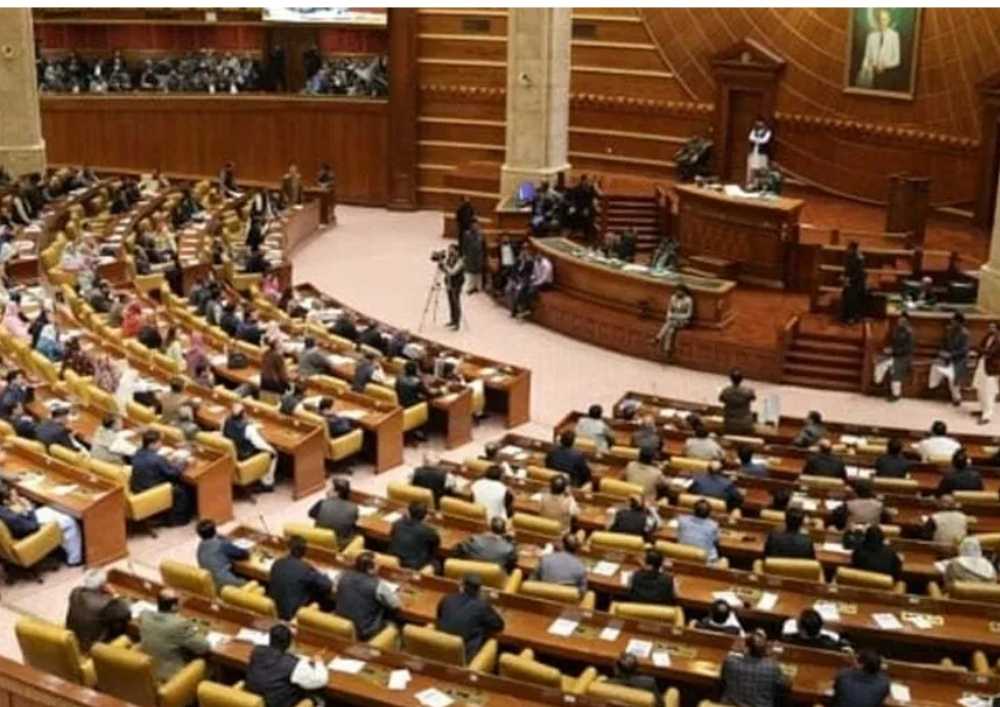
Islamabad – A controversial resolution passed by the Punjab Assembly has sparked widespread debate and concern, as it calls for a ban on the Pakistan Tehreek‑e‑Insaf (PTI) and its founder, Imran Khan, citing alleged anti-state activities. Observers warn that this move could deepen political polarization in Pakistan and further erode confidence in democratic institutions.
The resolution, pushed by the Pakistan Muslim League‑Nawaz (PML‑N), labels the PTI and its leadership as “anti-state” and a “tool of the enemy,” urging their exclusion from mainstream politics on national security grounds. Critics argue that equating political rivalry with threats to national security risks turning democratic competition into a securitized, exclusionary process.
Analysts note the timing of the resolution is politically significant. It comes shortly after remarks by the Inter-Services Public Relations (ISPR) chief, who criticised narratives deemed “anti-army” without explicitly naming any individuals. Observers believe the resolution may be an attempt to marginalize a major political force ahead of upcoming elections, raising questions about the fairness of the political process.
Pakistan’s political history shows that the use of legal and constitutional tools to disqualify or ban political figures has often backfired. Laws and orders in the past, such as the Public and Representative Offices (Disqualification) Act and the Elective Bodies Disqualification Order, removed opponents for extended periods, only to fuel instability, military interventions, and societal divisions.
Political commentators also highlight the irony that parties like the PML‑N and the Pakistan Peoples Party (PPP) themselves faced similar bans and exclusions in the past but eventually returned to prominence. Such precedents suggest that attempts to suppress popular political movements rarely succeed and can exacerbate tensions instead of resolving them.
Experts emphasise that democracy works best when voters decide the fate of political parties through free and fair elections. Using national security narratives to justify political bans risks undermining public trust and setting a dangerous precedent that may be exploited in future political contests.
Constitutional scholars point out that legal restrictions on political participation are traditionally reserved for cases involving criminal conduct or violent militancy, not mere political disagreement. They urge restraint and call for political competition to remain within the bounds of constitutional and judicial frameworks, preserving the integrity of Pakistan’s democratic process.
This story has been reported by PakTribune. All rights reserved.