


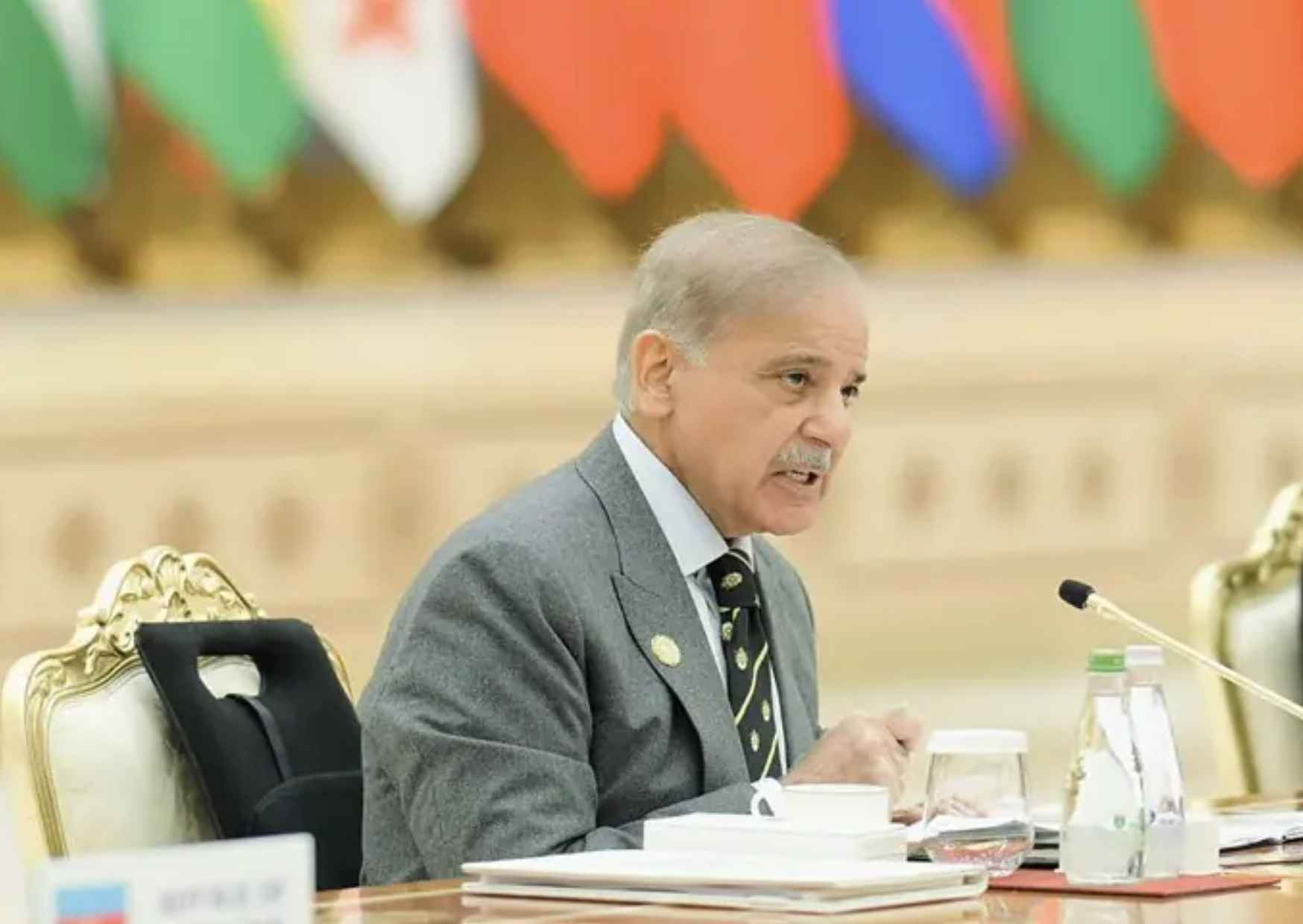
Islamabad — Prime Minister Shehbaz Sharif has stated that Pakistan was compelled to suspend all trade with Afghanistan due to Kabul’s failure to take action against terror groups operating from its territory, a move that has escalated tensions between the neighbouring countries and disrupted cross-border commerce.
Speaking at a national security workshop in Islamabad, the premier said the Pak‑Afghan trade blockade, in effect since mid‑October 2025, was a last resort. “They forced us into this decision,” he remarked, stressing that the suspension was aimed at protecting Pakistan’s internal security, not punishing the Afghan people.
Shehbaz highlighted that multiple rounds of diplomatic talks — including mediation efforts by Turkey and Qatar — failed to persuade Afghanistan to curb the activities of terrorist groups. He urged the Afghan authorities to demonstrate commitment to peaceful relations and to prevent militants from using their soil as a base for attacks on Pakistan.
The prime minister recalled that under agreements like the 2020 Doha Accords, Afghanistan had pledged to deny sanctuary to groups hostile to Pakistan. However, these commitments were not implemented, he said, warning that unless terrorist sanctuaries are dismantled, Pakistan will continue to enforce strict border measures.
Shehbaz specifically mentioned groups such as the Tehreek‑e‑Taliban Pakistan (TTP) and the Balochistan Liberation Army (BLA), urging that their operations from Afghan territory must be stopped. He said the resurgence of terrorism in Pakistan in recent years, including attacks in Balochistan and Khyber Pakhtunkhwa, is closely linked to militants crossing from Afghanistan.
Business leaders and traders have reported that the trade suspension has caused significant economic losses, affecting both Afghan markets and Pakistani exporters. Despite the economic toll, the government remains firm that security concerns take precedence over commerce until Afghanistan fulfills its commitments against terror networks.
Shehbaz’s remarks underline Pakistan’s position that bilateral trade and regional cooperation are contingent on effective action against terrorism, sending a clear message that economic engagement cannot continue at the cost of national security. Observers say the border blockade is likely to remain in place unless Kabul demonstrates tangible progress in curbing militancy, a development that could reshape the Pak-Afghan economic and security landscape.
This story has been reported by PakTribune. All rights reserved.