


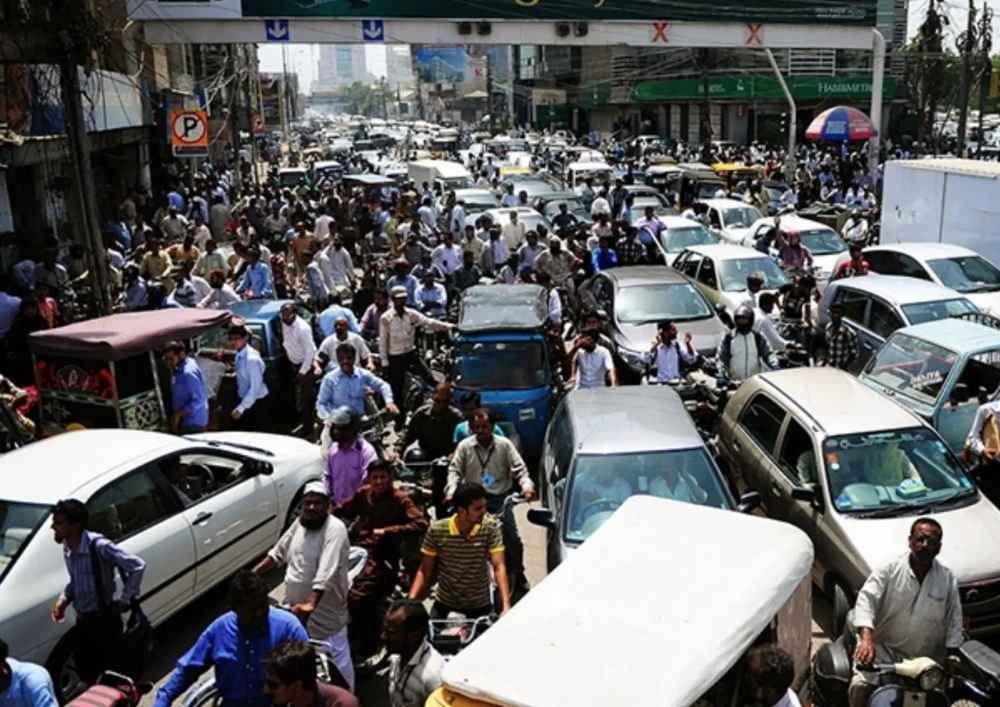
Islamabad – Pakistan’s population has now crossed an estimated 257 million, according to the latest data from the US Census Bureau, reinforcing the country’s position among the world’s most populous nations. While the overall growth rate has begun to slow, experts warn that the sheer size of the population continues to place immense pressure on resources, infrastructure, and public services.
The report highlights a key demographic concern: Pakistan’s total fertility rate (TFR) has declined to 3.25 children per woman, yet it remains well above the replacement level of 2.1 needed to stabilize population growth. Demographers caution that due to “population momentum,” the country will continue to add millions of people every year, keeping demand for housing, education, and healthcare on a steep upward trajectory.
Population density now stands at roughly 333 persons per square kilometre, intensifying pressure on urban areas, transportation networks, and public utilities. The young age profile of the country offers potential for a demographic dividend, but only if coupled with robust economic growth, employment opportunities, and investment in human development.
On the human development front, challenges remain serious. Life expectancy at birth is estimated at 60.5 years, among the lowest in the region, while under‑five mortality rates remain high at around 65 per 1,000 live births. These figures reflect ongoing gaps in maternal health, child nutrition, disease prevention, and access to quality healthcare across the country.
Experts also warn that the large proportion of children and young adults — often referred to as the “youth bulge” — will continue to drive demand for schools, universities, and jobs. Without effective planning and investment, this demographic advantage risks turning into a social and economic burden, straining urban infrastructure and public services.
Policymakers and development experts emphasise the urgent need for action. Broad public awareness campaigns, improved family planning and reproductive health services, and accelerated investment in education, healthcare, and employment are seen as critical to ensure that Pakistan’s growing population becomes a force for economic growth rather than a challenge to national stability.
The report underscores that Pakistan stands at a critical juncture in its demographic transition. Slowing fertility, improving mortality, and rapid urbanisation present opportunities, but the country’s ability to translate these trends into long-term development gains will depend on timely policy interventions and efficient resource management.
This story has been reported by PakTribune. All rights reserved.