


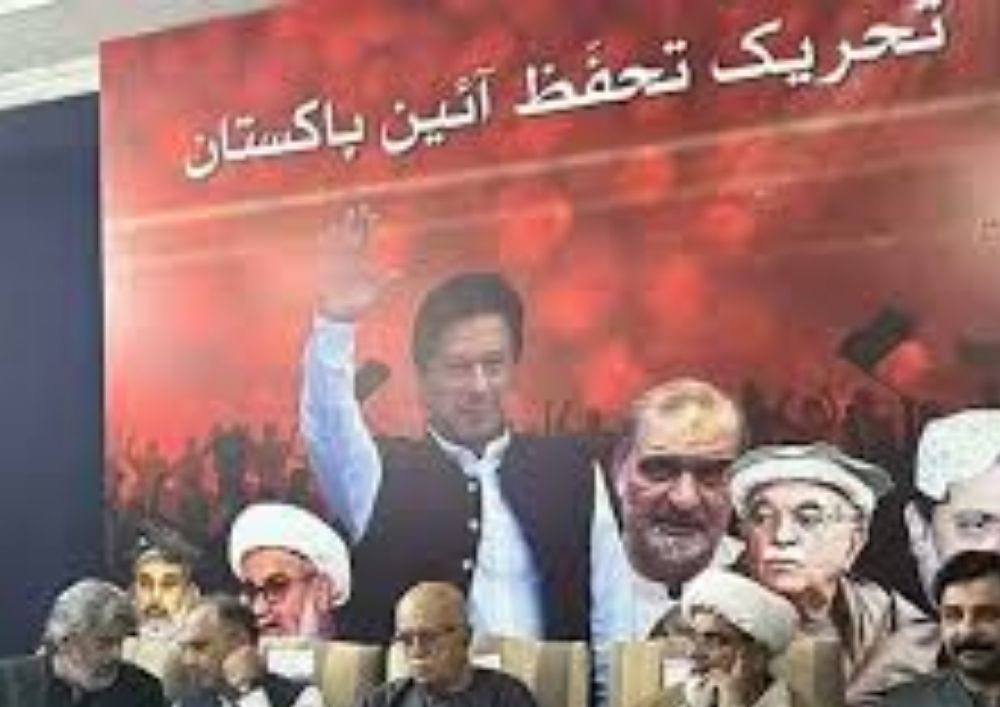
Islamabad – In a move aimed at easing political tensions, Pakistan’s opposition alliance Tehreek Tahafuz Ayeen‑i‑Pakistan (TTAP) has expressed its willingness to engage in dialogue with the federal government, even as the Pakistan Tehreek‑i‑Insaf (PTI) continues to maintain a cautious and non-committal stance.
During a high-level meeting chaired by PkMAP leader Mahmood Khan Achakzai, the alliance resolved that political dialogue remains essential for democratic stability and national cohesion. Key figures, including Allama Raja Nasir Abbas, Asad Qaiser, Mustafa Nawaz Khokhar, and others, emphasised that discussions should focus on transparent future elections, consensus on the appointment of a chief election commissioner, supremacy of parliament, rule of law, and protection of human rights. The alliance also highlighted the importance of drafting a new political charter to address pressing issues such as economic instability, law and order, and public confidence in governance.
As part of efforts to bring PTI into the dialogue, Achakzai reportedly held talks with Aleema Khan, sister of PTI founder Imran Khan, exploring avenues for broader opposition engagement. Alliance leaders underlined that the aim of dialogue is constructive national consensus rather than political point-scoring.
Despite these overtures, PTI remains firm in its stance. Party spokesperson Sheikh Waqqas Akram reiterated that, under the direction of Imran Khan, PTI will not enter into talks with the government at this stage, arguing that the political conditions for meaningful negotiations have yet to be met. While some allied figures may choose to engage, the PTI’s leadership has rejected the dialogue offer, maintaining a firm line against what it perceives as government-imposed constraints.
Prime Minister Shehbaz Sharif has repeatedly extended invitations for talks, stressing that the government is open to dialogue on legitimate and constructive issues, but will not entertain demands based on blackmail or political brinkmanship.
Political analysts note that the divergence between TTAP’s willingness and PTI’s reluctance underscores the fragile and complex nature of Pakistan’s current political environment. They argue that if all parties approach negotiations in good faith, meaningful dialogue could reduce political tensions, strengthen institutions, and pave the way for broader national consensus, which is urgently needed to tackle economic and social challenges facing the country.
This story has been reported by PakTribune. All rights reserved.