


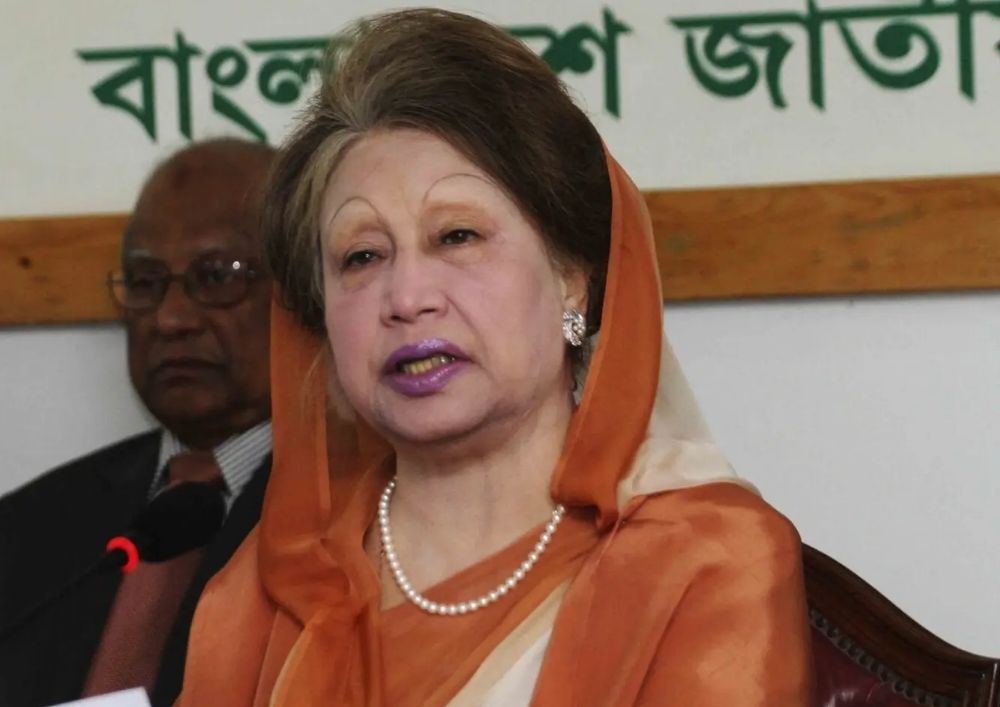
Dhaka, Bangladesh — Begum Khaleda Zia, Bangladesh’s first female prime minister and one of the most influential figures in the country’s political history, has passed away at the age of 80 after a prolonged illness. Her death was confirmed by the Bangladesh Nationalist Party (BNP), plunging the nation into mourning and marking the close of a powerful and often polarising chapter in Bangladeshi politics.
Khaleda Zia had been battling multiple health complications for several years and was undergoing treatment at a private hospital in Dhaka, where her condition deteriorated in recent weeks. Party officials said she breathed her last in the early hours of the morning, surrounded by close family members. Her passing comes at a critical political moment, with Bangladesh preparing for general elections in the coming months.
Rising to prominence after the assassination of her husband, former president Ziaur Rahman, Khaleda Zia entered politics and went on to found and lead the BNP. She made history in 1991 by becoming the country’s first woman prime minister, steering Bangladesh through a return to parliamentary democracy. She later served a second term, cementing her position as a central force in national politics for more than three decades.
Her political career was largely defined by a fierce and long-standing rivalry with Sheikh Hasina, leader of the Awami League. The intense competition between the two leaders shaped Bangladesh’s political landscape, with power alternating between their parties amid periods of instability, protests and sharp political divisions. Together, the two women dominated the country’s politics for years and came to symbolise opposing visions for Bangladesh’s future.
In her later years, Khaleda Zia’s public life was overshadowed by legal challenges and imprisonment on corruption charges, which her supporters repeatedly described as politically motivated. She spent years under detention and restricted movement due to both legal cases and declining health. Earlier this year, she was acquitted in those cases, a development seen by her party as a major political vindication.
Despite her illness, Khaleda Zia remained a symbolic leader of the BNP, with her son Tarique Rahman increasingly taking on a central role within the party. Her death is expected to have significant political implications, particularly as Bangladesh enters a sensitive electoral phase.
Tributes have poured in from across the country and abroad, with leaders, supporters and critics alike acknowledging her role as a trailblazer for women in leadership and a key architect of Bangladesh’s modern political history. Khaleda Zia leaves behind a complex legacy — one marked by democratic struggle, intense rivalry and enduring influence.
This story has been reported by PakTribune. All rights reserved.