


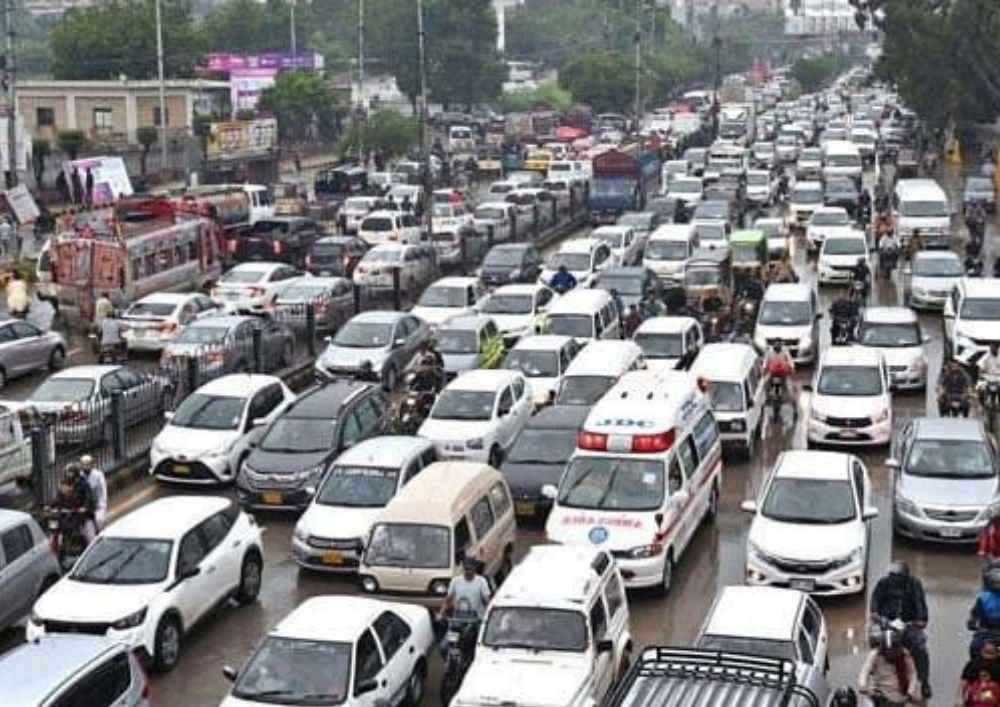
Karachi — Despite intensified traffic enforcement measures, Karachi continues to witness a troubling number of fatal road accidents, exposing the limitations of enforcement-driven solutions in addressing the city’s deep-rooted mobility and safety challenges.
Official data shows that hundreds of lives were lost on Karachi’s roads over the past year, turning traffic safety into a major civic concern. While authorities claim that stricter policing, digital challans and targeted crackdowns have contributed to a gradual decline in fatalities in recent months, experts argue that these gains remain fragile and insufficient.
Traffic police officials maintain that deterrence is currently the most effective tool available. Measures such as increased surveillance, monitoring of high-risk corridors, mandatory vehicle fitness checks and tracking systems for commercial transport have been introduced in an effort to curb reckless driving and remove unfit vehicles from the roads. According to officials, these steps have led to a modest reduction in daily accident-related deaths.
However, urban planners and transport experts caution that enforcement alone cannot fix Karachi’s chronic road safety crisis. They point to unsafe road design, deteriorating infrastructure, weak coordination among transport authorities and the absence of a reliable public transport system as core issues that continue to put pedestrians and motorcyclists — the most vulnerable road users — at risk.
Experts note that much of Karachi’s road network was designed decades ago and has failed to evolve with the city’s rapid population growth and rising vehicle numbers. Poorly marked lanes, broken footpaths, inadequate signage and insufficient street lighting are common across the metropolis, creating hazards that policing cannot resolve.
The lack of accessible public transport has further compounded the problem. With limited options available, residents increasingly rely on private vehicles and motorcycles, adding to congestion and increasing the likelihood of accidents. Analysts stress that meaningful reductions in road fatalities will remain elusive unless serious investment is made in mass transit and long-term urban planning.
Transporters, meanwhile, argue that enforcement actions often unfairly target certain vehicle categories, particularly heavy vehicles, without addressing broader governance and infrastructure failures. They insist that accountability should focus on individual violations rather than blanket restrictions.
As Karachi continues to grapple with deadly roads, experts and civic voices are calling for a comprehensive approach that combines enforcement with safer road design, improved public transport and coordinated urban policy — warning that without systemic reform, the city’s streets will remain a lethal challenge for commuters.
This story has been reported by PakTribune. All rights reserved.